My Husband Couldn’t Tell Our Identical Twins Apart—Until One Night Changed Everything
My husband, Henry, had always struggled to tell our identical twin boys apart. Max and Leo were four years old, with the same blond curls, blue eyes, dimples, and nearly identical voices. While I could recognize them instantly, Henry often confused their names.
At first, we laughed about it. The boys even enjoyed switching clothes and pretending to be each other. But I eventually realized that Henry was becoming increasingly embarrassed by his mistakes.
One afternoon, I returned from grocery shopping and discovered that our sons had completely different haircuts. Their beautiful curls were gone. Instead, Henry had shaved a large letter into each child’s head: an M for Max and an L for Leo.
When I confronted him, he proudly explained, “Problem solved. Nobody can mix them up now.”
I was furious that he had made such a drastic decision without asking me. Henry insisted it was only hair and that the boys loved their new hairstyles. Although I was upset, I decided to discuss it with him later.
That night, around 11:30, I checked the baby monitor and noticed something unusual. Leo had climbed out of bed, awakened Max, and whispered something to him. The boys switched beds, exchanged blankets, and began laughing.
A moment later, Henry entered their bedroom carrying his electric clippers.
To find out how the story continues, check the comments below. 👇👇👇
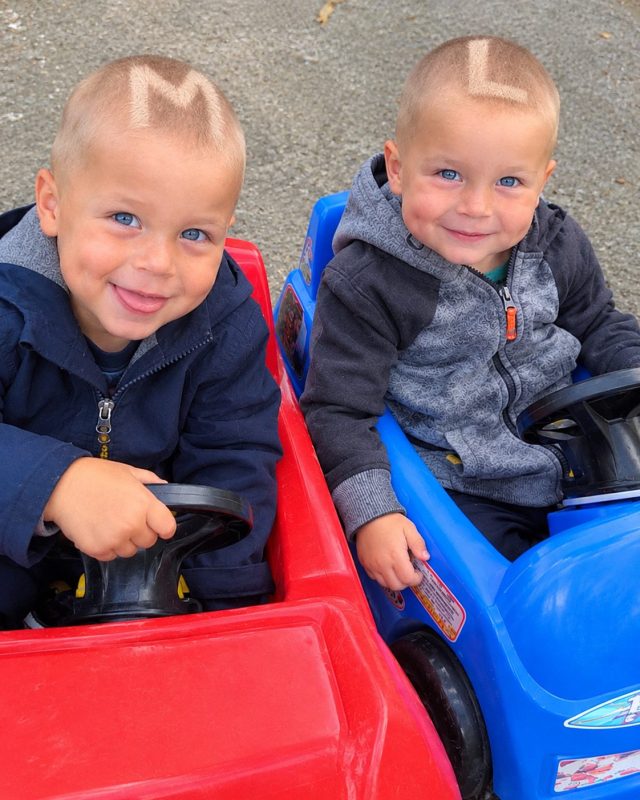
I rushed upstairs and demanded to know what he was doing. Henry explained that the boys had found the clippers earlier and had already shaved off most of their letters themselves.
But when I asked why they had done it, Leo quietly said something that changed everything.
“Because Daddy was sad.”
I looked at Henry, confused. The boys explained that they had overheard him talking to his brother, Tom, on the phone earlier that afternoon.
Henry finally admitted what he had been hiding.
He told Tom that he hated being unable to recognize his own children sometimes. Although he knew their personalities, interests, and habits, he occasionally struggled to identify them when they stood together without speaking.
He felt ashamed because he believed a good father should always know which child was which.
“I know Max loves dinosaurs and Leo hates getting water in his face,” he explained. “But sometimes, when they’re standing together, I just can’t tell.”
I felt terrible. For years, I had laughed at his mistakes without understanding how deeply they affected him.
Then Max approached his father and asked, “Who am I?”
Henry looked carefully at him before answering, “Max.”
“How do you know?”
“You’re holding Pickle, your dinosaur.”
Max immediately threw the toy onto Leo’s bed and asked again. The boys switched places, changed blankets, and tried to confuse their father.
Sometimes Henry guessed correctly. Other times, he got it wrong. But for the first time, he laughed without feeling embarrassed.
He began recognizing the little things that made each boy unique. Max wrinkled his nose when nervous and walked carefully into rooms. Leo rubbed his left ear when excited and charged into every room as if he had been fired from a cannon.
They were different in hundreds of ways. Their faces simply weren’t the only way to recognize them.
Later that evening, after the boys had gone back to sleep, Henry told me something else. He had visited an eye doctor because he suspected something might be wrong with his vision. His eyesight was perfectly healthy, but the doctor suggested that his difficulty recognizing faces might involve something other than his eyes.
After further consultation, a specialist eventually explained that Henry had traits consistent with developmental prosopagnosia, commonly known as face blindness. It meant that he relied more heavily on voices, movements, and other identifying features than most people.
There was no simple medication or quick solution, but understanding the condition helped him stop blaming himself.
We also stopped turning his mistakes into jokes.
As the boys grew older, their hair returned to normal. They eventually started kindergarten, where their teacher asked how she could tell them apart.
Henry explained, “Max likes green, and Leo likes blue. But don’t rely on their clothes. They’ll probably switch them.”
The twins were delighted by the idea.
They still play identity games, exchange clothes, and occasionally pretend to be each other. Henry sometimes gets their names wrong, and even I make mistakes.
But our family has learned that recognizing someone isn’t always about recognizing their face.
Henry already knew which child loved dinosaurs, which one hated strawberries, who slept with the green dinosaur named Pickle, and who rubbed his ear when nervous.
He had always known his sons. He simply hadn’t understood that knowing them and identifying their faces were two different things.
That night, our boys taught us something important: children don’t need perfect parents. They need parents who love them, understand them, and make them feel special.
Henry had tried to solve his problem with two ridiculous letters shaved into their heads. But Max and Leo showed him that he never needed those letters in the first place.
They didn’t need their father to identify them correctly every single time. They needed him to know them. And he always had.